Go to content

How to buy a van or campervan in New Zealand
New Zealand is an ideal country to explore in a campervan, traveling at your own pace and spending as much time as you want at each stop. It's the most popular type of tourism in the country, and we definitely understand why.
To avoid having to rent a vehicle is very common among those who come to work in New Zealand with a Work and Holiday Visa or travelers who will be there for several months buy a second-hand van or camperIn this guide, we explain step-by-step how to buy a van or car in New Zealand and everything you should keep in mind.
- Buy a campervan in New Zealand or rent one?
- Step-by-step guide to buying a used car or van in New Zealand
- How to find campervans or cars in New Zealand
- What type of vehicle should I buy?
- What to look for BEFORE buying a campervan in New Zealand
- Buying the vehicle in New Zealand
- Paperwork when buying a campervan in New Zealand
- Vehicle insurance
- Our personal experience
- Best app for camper life in New Zealand
¿Add to Cart a camper van in New Zealand or rent?
This is the eternal question among those of us who arrive in New Zealand on a tourist visa, with the sole purpose of traveling around the country. The most obvious option, and the one most people think of, is renting a campervan.
Rent with a reliable company like Autobarn or the popular one jucy Is the best option If your trip will last about 45 days or lessWe don't think it's worth getting involved in the bus hassle.carCompare, make a large outlay and shortly afterwards begin the reverse process.
On the other hand, if your trip is going to last longer and your priority is to reduce your travel budget, buying a used van is a great idea. The goal is basically to find a vehicle that meets your needs and that you can afford with the aim of using and enjoying it while touring New Zealand. Shortly before the trip comes to an end and sell it for a very similar priceIf you lose value and/or have to pay for repairs, that will be the price you would have been able to use the vehicle. It's a kind of rental, but probably much lower than the actual price of camper van rentals.
We know the theory sounds good, but practice is what holds most people back, so we want to explaincar In detail how to buy a camper van in New Zealand and show that it's very simple.
Step by step guide to buy a used car or van in New Zealand
As I mentioned before, we're going to explaincar A step-by-step guide on how to buy a used car in New Zealand. We might miss a few details, but we and several friends completed the process without any major issues. In short, This is the normal process that you should follow to buy a camper van in New Zealand.
- Decide the type of vehicle you need and your budget
- Buscar and compare the vehicles that interest you most
- Negotiate price and meet in person with the seller
- Visual inspection and driving test
- Close the deal, make payment, and formalize the name change
- Take out insurance
Before travel to new zealand be sure to ask for the carinternational driving net, technically it is not mandatory during the purchase process but it is required to travel around the country.
How to find camper vans or cars in New Zealand
There are a wide variety of websites where second-hand vehicles are advertised, but the best way and the one that most travelers use are the Facebook groups dedicated to advertising this type of vehicle. There are many, and some publish spam, but we recommend joining several and actively reviewing them to find the ideal vehicle.
You can also resort to more traditional methods such as second-hand car stores or, if you are in Auckland, go to the fair that is held every Sunday in Auckland City Car Fair where many travelers try to sell their vehicles before leaving the country and are very flexible with the price.
Most second-hand campers are offered in large cities, mainly in Auckland and Christchurch. If you want to buy it in another city, you'll have far fewer options to choose from.
There are many more, but some of the best websites and Facebook groups are:
- Trademe.com
- Backpacker Cars New Zealand
- New Zealand Car Market and Campervans
- Buy and Sell Campervans
What vehicle type purchase?
The first thing you need to be clear about is whether you want to buy a campervan or prefer a car, which is very common in New Zealand. The differences are obvious: space, although it's true that some campervan models are quite spacious, comparable to smaller vans.
Camper car
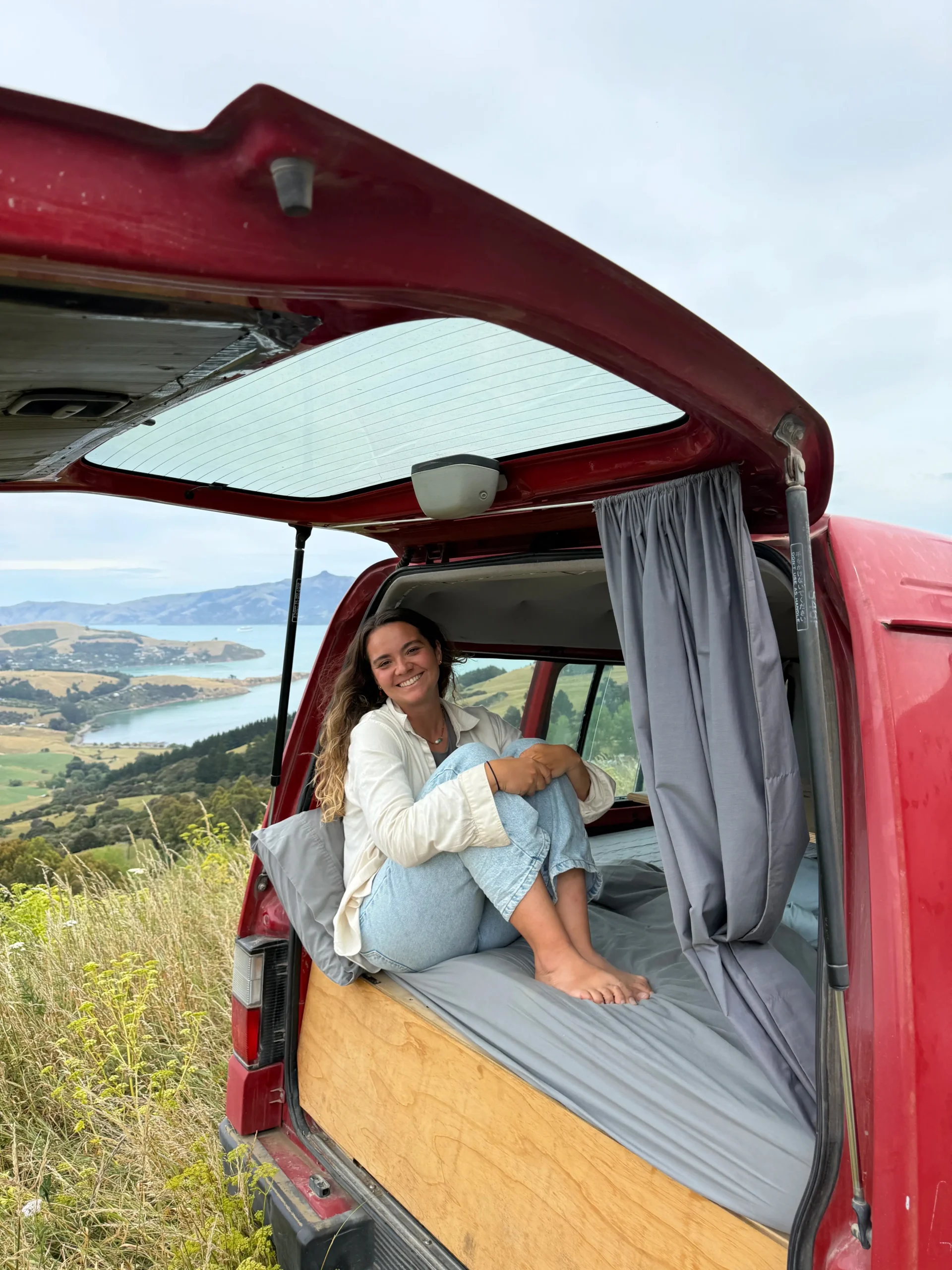
This is the most economical option and is often chosen by solo travelers or couples on a budget. The main drawback is the lack of space in the smaller models, as it will be very difficult to comfortably fit inside, especially if there are two of you. The larger the car, the higher the price.
El interior space is carefully designed down to the last millimetre And you must be very organized; it's not unusual to see some camper vans leave things outside to make room for sleeping. The kitchen is usually installed in the trunk, or they simply carry a camper van and cook wherever they can.
Larger minivans have ample interior space, very similar to smaller vans. These are the most convenient camper vans for couples, although they are somewhat more... carthe.
In conclusion, the main advantages of choosing a camper car are that they are very economical, gThere is little fuel and a lot of supplyThe disadvantages are limited comfort and space, especially in the cheaper models. And some of them aren't certified for free camping (more on that later).
Personally, we would only opt for this option if the goal is to use it for short breaks or trips; if you want to live there for several months, it can be a challenge.
Are you a mountain lover? Here you have what for us were the best hiking trails in New Zealand.
Campervan or camper van
This is the most alternative carBut the most comfortable one, and the one that allows you to live permanently in it during your trip. New Zealand has a strong camper culture, and the supply of used campervans is vast. There are many different types, although the most common among travelers are older, rather small vans. Don't consider European campervans, as those models aren't as common in New Zealand.
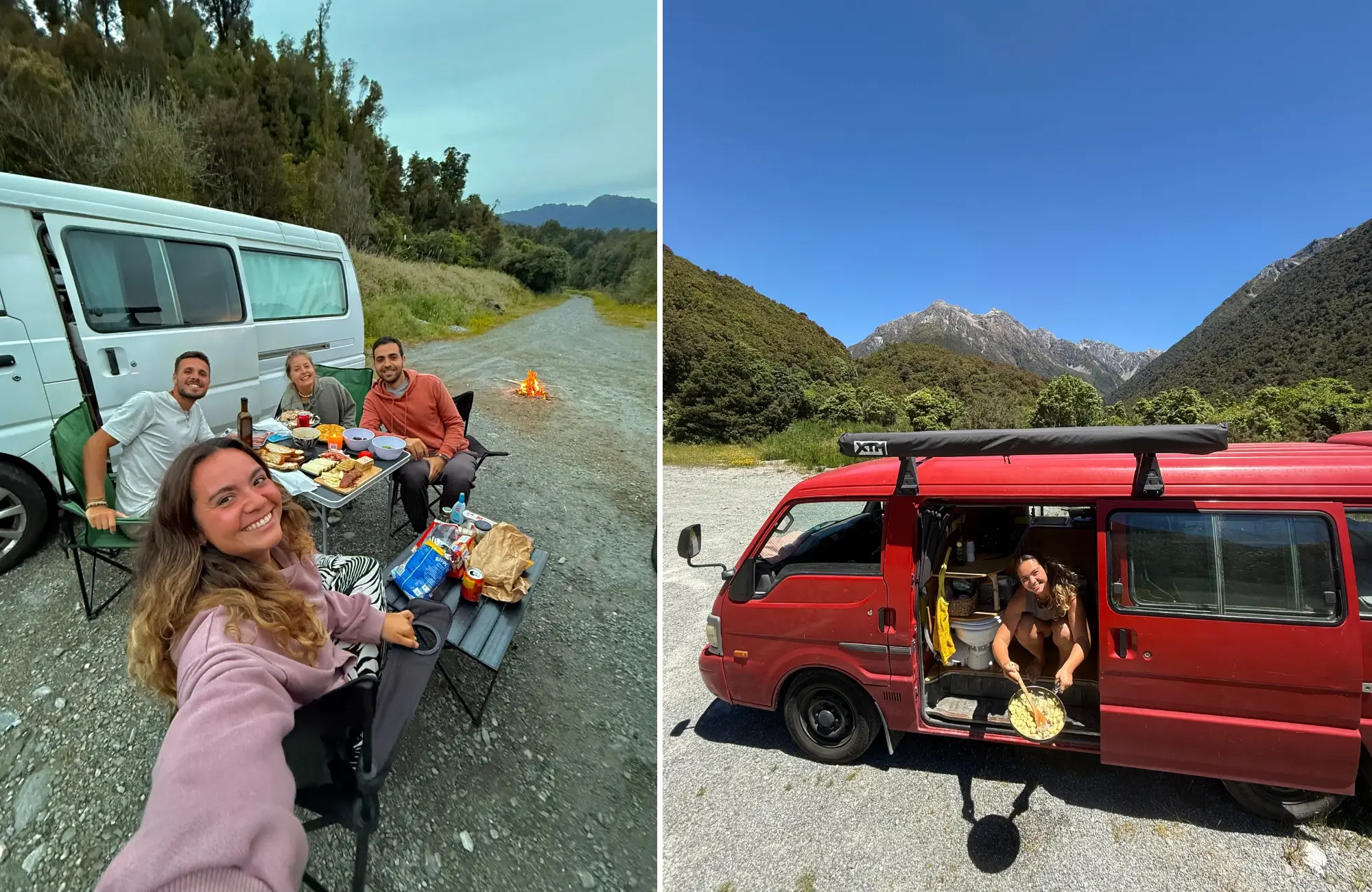
There are all kinds of interior layouts, with an indoor and outdoor kitchen, with or without a bathroom, a fixed or removable bed, etc. There are a large number of models that are practically identical, so the layouts usually match. For us, the best is interior kitchen, bathroom to be self-contained (we will talk about this below) and pull-out bed which converts into a table + sofa.
Self-contained or Non-Self-contained?
A vehicle is considered self-contained when it is self-sufficient thanks to a clean water tank, one dirty water tank and a fixed toiletIn New Zealand, if you meet these main requirements, you can apply for a certificate and receive a green sticker (it was blue before 2025), which almost all campervans in the country display in the trunk. Some campervans are also green, but due to limited space, it's more difficult to meet the requirements.
Being self-contained allows you to sleep in the hundreds of free campsites that there is in the country And in some specific regions, you can even sleep without having to camp. In short, not only does it allow you to spend the night at any campsite in the country, but it also gives you the chance to sleep for free.
On the other hand, if you do not have the certificate, you will only be able to sleep in those campsites that accept non-self-contained vehiclesMost paid campsites accept them, but if you want to sleep in a free campsite, you'll have a hard time finding one.
📍Itineraries
New Zealand in 10 days
What to look for BEFORE buying a camper van in New Zealand
Now that we've more or less defined the main differences and the most common models, the typical question that arises is how to make a good decision. Therefore, we're going to try to explain...carIn our opinion, here's what you should consider before choosing, negotiating, and buying a campervan in New Zealand. The best advice is to see several vehicles you're interested in person so you can compare them.
Mileage
Unless you have good mechanical knowledge to check the condition of the vehicle, try to searchcar Choose a model you like that has the lowest possible mileage. Fewer kilometers usually means fewer problems, but also a higher price, so you need to find a balance.
If you can afford it, try to get one with between 150 and 250 km, which is quite common for this type of vehicle. Personally, we'd try to avoid those with more than 300 km unless you can't afford anything else or they have diesel engines from very reliable brands like Toyota.
In case of have a timing belt Ask when it was last changed. It depends on the model and is changed every 80-100 km, and it's not a cheap repair. If it has a timing chain, it's not changed.
Almost all vans are from Japanese brands like Nissan, Mazda, Mitsubishi, or Toyota, known for their reliability and durability, so mileage shouldn't be your biggest concern. Many models are available in both gasoline and diesel, the latter of which are more fuel-efficient and tend to be more reliable.

When did the last WOF happen?
El WOF or Warranty of Fitness It's the equivalent of the MOT (Technical Inspection) in Spain. This technical inspection is passed every 12 months (6 for cars built before 2000), and the next inspection must be at least one month away in order to sell the vehicle. If you're interested in a vehicle with an expiring MOT, negotiate with the owner to have it passed. This way, you'll know if there are any issues before you buy.
Try to findcar vehicles that have recently passed the WOFThis will give you a small guarantee that the vehicle was roadworthy and likely still is. However, if it was serviced 10 months ago, many minor issues may have occurred in that time that you'll need to repair before undergoing the WOF again. Also, if there are 9 months until the next WOF and your trip is scheduled for 3 months, you won't have to pay for it.
When does REGO expire?
El REGO is the road tax And you can choose how many months to pay for; it usually costs around 100-150 NZD per year. If you've renewed your REGO card, it's a little better, but it's a very simple process that can be done at the post office, and since the price isn't excessive, it's not such a determining factor in your choice.
Do I have to pay RUC?
The Road User Charges (RUC) is an additional tax that diesel vehicles payThis tax is offset by a much lower fuel price since gasoline includes it. In the end you end up paying a similar price per liter but with an additional procedure.
The RUC is paid online every 1.000 km and costs around 75 NZD for vans of this style. Don't buy a van with a RUC lower than the actual mileage, or you'll have to pay the outstanding debt.
Outstanding fines
Before purchasing a vehicle, you'll need to know if it has any outstanding fines, since those fines will be yours if the owner changes ownership. This isn't the norm, but if you don't trust the owner too much, you can check the website. Carjam where you can see more information about the vehicle and you can purchase a report with the history and vehicle fines.
Electrical system and batteries
If you want to have a decent refrigerator and be able to carTo keep your devices running smoothly, you'll need a second battery. If you're also on a Work and Holiday visa, you'll likely spend long periods driving very few kilometers a day, so the alternator might not be sufficient. carFor two batteries, a solar panel would save you worries.
If you don't have a second battery, you'll have to use the typical cigarette lighter socket and carYou can charge your devices there while you drive. Some even connect a small refrigerator.
We had one second battery that carWe had enough money to keep the fridge plugged in, have lights, and carGar computers, mobiles, drones, we're doing great.
Where is the kitchen?
You will usually find two types of cookers, indoor or outdoor, and they almost always run on a 9kg gas cylinder.cargable. In the case of the exterior They are usually mounted in the trunk With a tap and stove. The stove is usually a camping gas stove, so you can take it to a picnic table if you need it. The good thing about this type of stove is that there are fewer odors inside the vehicle and they take up little space. The bad thing is that you'll have to cook and clean up outside, whatever the weather.
In the case of interior kitchen there are some with fixed stoves and others with removable stoves, very convenient because you can take them to an outdoor table if the weather is nice. The main advantage is that you can cook and wash dishes comfortably regardless of the weather outside. The disadvantage is that you usually won't be able to stand upright, and both heat and odor can accumulate if you don't ventilate well.
Other considerations
Other things to keep in mind depending on your needs will be:
- Fixed or convertible bed. If you're tall, make sure you fit!
- Indoor table or not.
- Interior height available (high roofs are wider).
- Air conditioning is available; we were traveling in spring and early 2019 and didn't miss it.
- Refrigerator on 24/7.
- Storage available for clothing/food.
- Awning and camping equipment.
Buying the vehicle in New Zealand
Once you've reviewed the market and found the camper that best suits your needs and budget, it's time to meet with the seller to see it in person and make your final decision.
Visual inspection of the vehicle
Most used camper vans have high mileage and aren't in perfect condition, but you'll need to do a quick visual inspection to detect any worrisome defects. You can hire a mechanic or do it yourself. If you're doing it yourself, keep these points in mind:
- Oxide: If the carIf the vehicle has too much rust, it might not pass the WOF inspection. Depending on its age, if it has a little rust in some minor areas like the bumper, you don't need to worry.
- Bumper: Touch it with a little force to see that it doesn't come off at the slightest.
- Exhaust pipe: Do the same as with the bumper.
- under the hood: Check for rust or excessively low oil or other fluid levels.
- Fluid losses:After watching the vehicle for a while, move it to see if it has left drops on the ground.
- Vehicle interior: Check that the lights and seatbelt work and that everything seems to be okay.
Driving test
You shouldn't buy a vehicle without test-driving it first, although there are always exceptions, such as travelers who negotiate and buy before arriving. Once you've done a visual inspection of the vehicle, ask to drive it to make sure everything is working properly. Start it from a standstill several times to ensure it's working properly. check the clutch, shift all gears, try giving some accelerations and braking strong to see that everything responds as it should and there are no strange loud noises.
Demonstration of how it all works
If you're happy with the vehicle and the price, it's time to prepare to be the future owner. Take advantage of the time you're with the owner to ask him how everything worksThat way, when it's yours, you'll know how to do everything on your own without having to look for help.car YouTube tutorials or ask the previous owner via WhatsApp.
Some important things you should know are: when it's time to change the oil, how to access the engine (in many vans it's under the passenger seat), how to empty and refill the water tanks in both the sink and the bathroom, how to disconnect the gas line from the bottle to refill it, how the refrigerator works, and if you need to take anything into account regarding the electrical system. In the end, all of these things are... The tips will be very useful to you to get used to your new vehicle.
Paperwork when buying a campervan in New Zealand
One of the best things about buying a campervan in New Zealand is the ease and speed to make the name changeOnce you've paid the previous owner, putting the vehicle in your name won't cost you anything; in fact, the previous owner's presence or signature isn't even required.
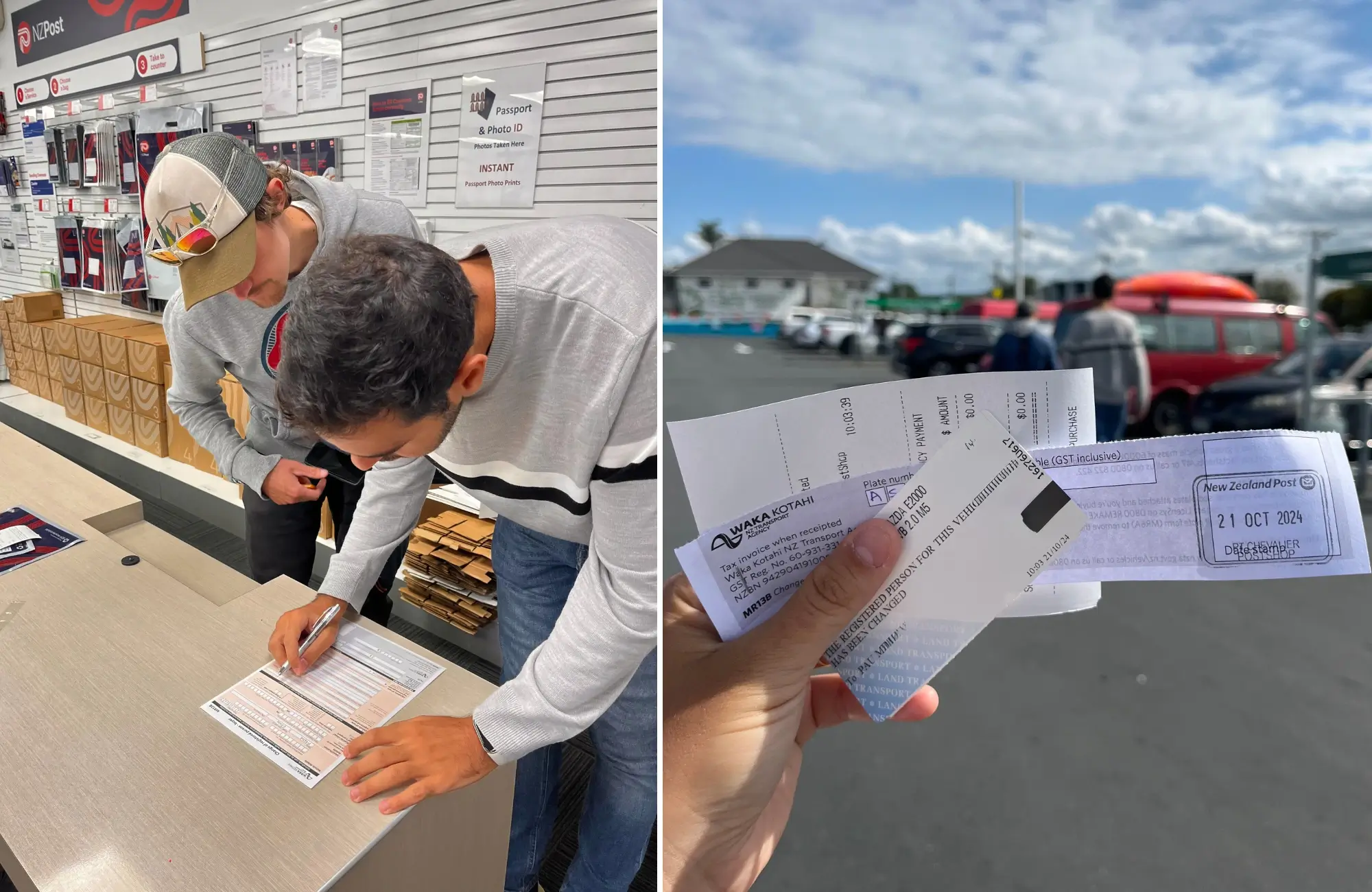
You just have to go to a post office and fill in the Form MR13B They usually have it handy. If you can't find it, let them know you're there to change the name of a vehicle, and they'll help you. On that form, you'll need to enter the license plate, make, and model. They also ask for your personal information. For the address, it's common to include the address of a place you've stayed. Normally, it's not even necessary to fill out the driver's license reference field.
Once you submit the form to the postal employee, they will check that no important information is missing and will carry out the automatic name change for freeThen he'll give you a small carA card-shaped registration document with vehicle details and your name to prove ownership. That's it, it's very easy, now you have a camper van to enjoy the country.
Insurance for the vehicle
Just like you wouldn't want to travel without a good health insurance You also don't want your new vehicle to be uninsured. Really it's not mandatory to be able to drive, but it is risky not to have insurance, so we decided to take it out.
You can choose between comprehensive or third-party insurance. The usual option for older vans or camper vans is to hire third-party insurance because comprehensive insurance would cover a much lower amount than the price you paid due to its age, as it doesn't take into account that it's a camper, nor does it cover the interior camper structure if it's damaged.
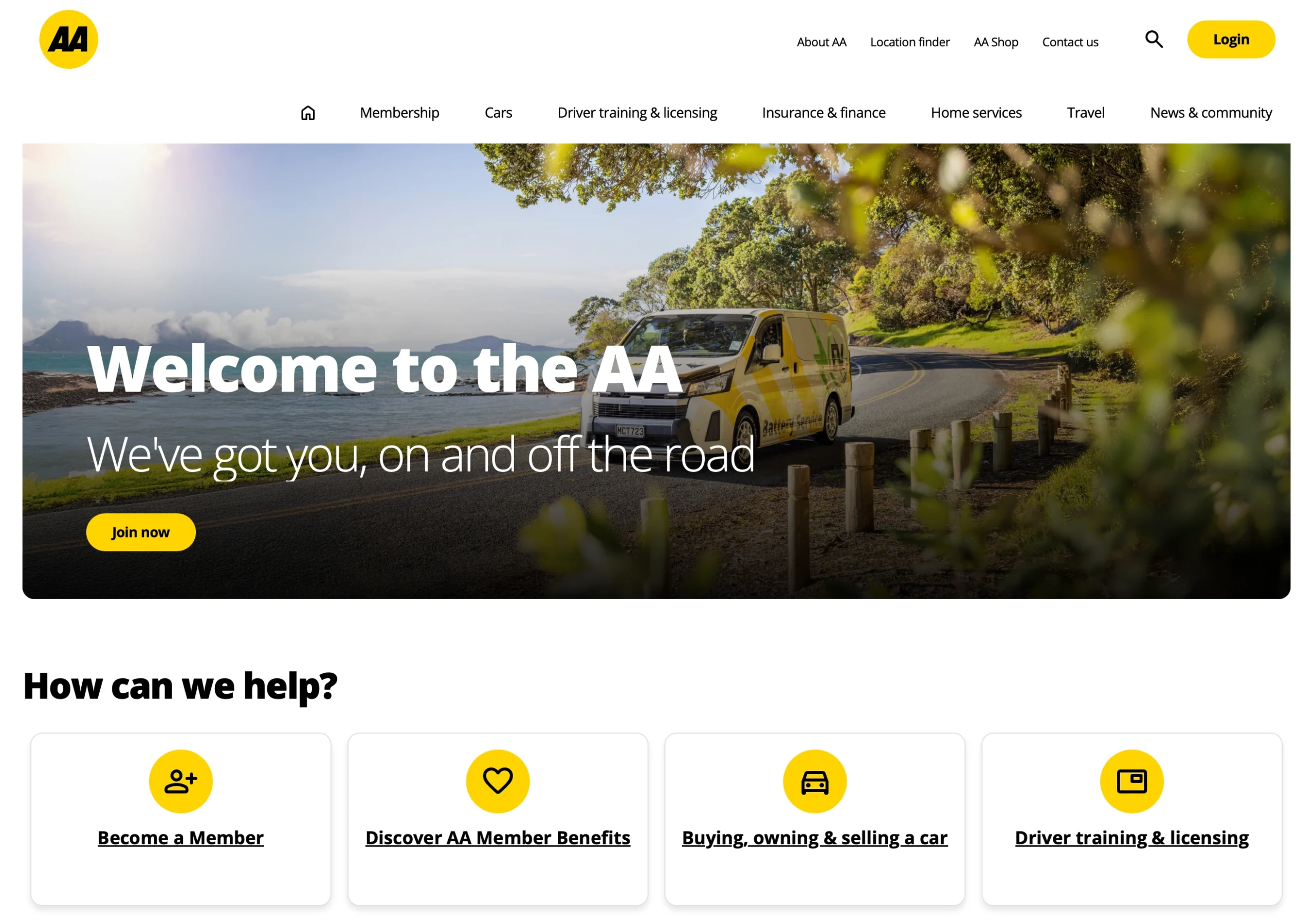
The most famous insurance company in NZ is AA and it is one of the few that allows you taking out insurance as a foreigner. It has the advantage that you can choose to pay fortnightly, monthly or annually and cancel at any timeWe pay third-party insurance with AA every two weeks, and we canceled it the day we sold it. We believe it's the easiest way to get your campervan insured in New Zealand.
Assistance in carretera
A peculiarity of New Zealand is that its insurance do not include assistance in carreteraLuckily you can hire one partner membership from the same AA company that includes you 6 assists in caryearly retention and in theory also hotel nights while the vehicle is being repaired.
This membership costs NZD 50 per year, considerably less than a single visit would cost you. carRetera. It gives you access to quite a few interesting discounts, such as discounts at AA workshops (perfect for oil changes) and discounts on the Interislander ferry. Interestingly, in the end we saved more with the discounts than it cost us.
Our personal experience
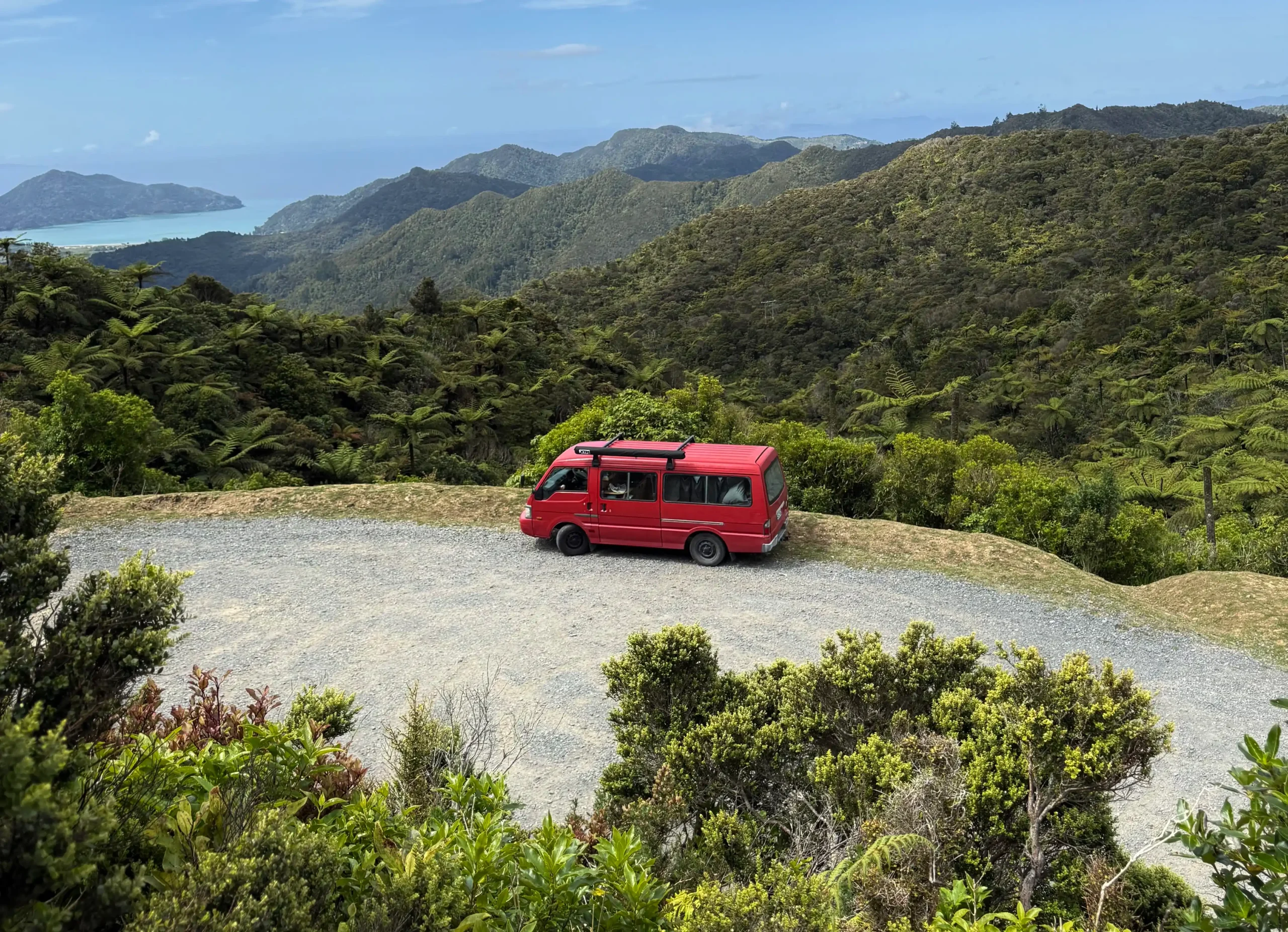
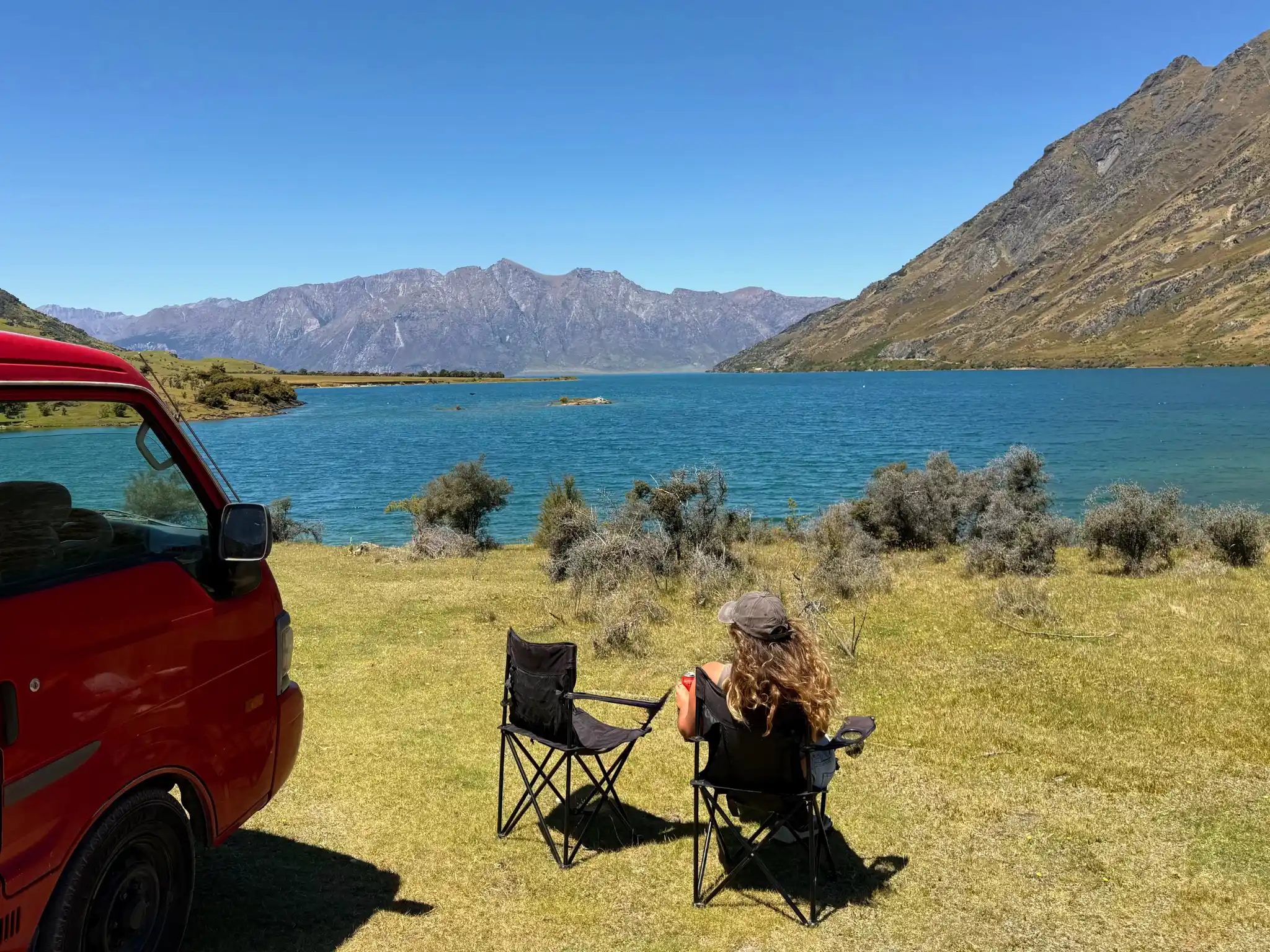
So you can have a real reference example, we share details of our purchase. Specifically We bought a Mazda E2000 (almost the same as the Mitsubishi L300) gasoline with 262 km for €8.000 In November, before the peak season, we covered 2 km in two and a half months and spent €10 on gas. During that time, we had to replace the alternator belt (€1300) and perform a complete overhaul with oil change (€85), which is usually done every 215 km. We also renewed the REGO for six months before selling it.
Among other everyday items, we bought an awning, boxes for storing clothes, and an inflatable kayak. These extras cost us between €300 and €400. We also repaired some rusty areas and repainted them with spray paint. We ultimately sold it in February for €8.500, the same price. If we factor in the money spent on extra equipment and repairs, we didn't lose any money on the van. Therefore, it was infinitely more cost-effective than renting from a rental company.
best app for camper life in New Zealand
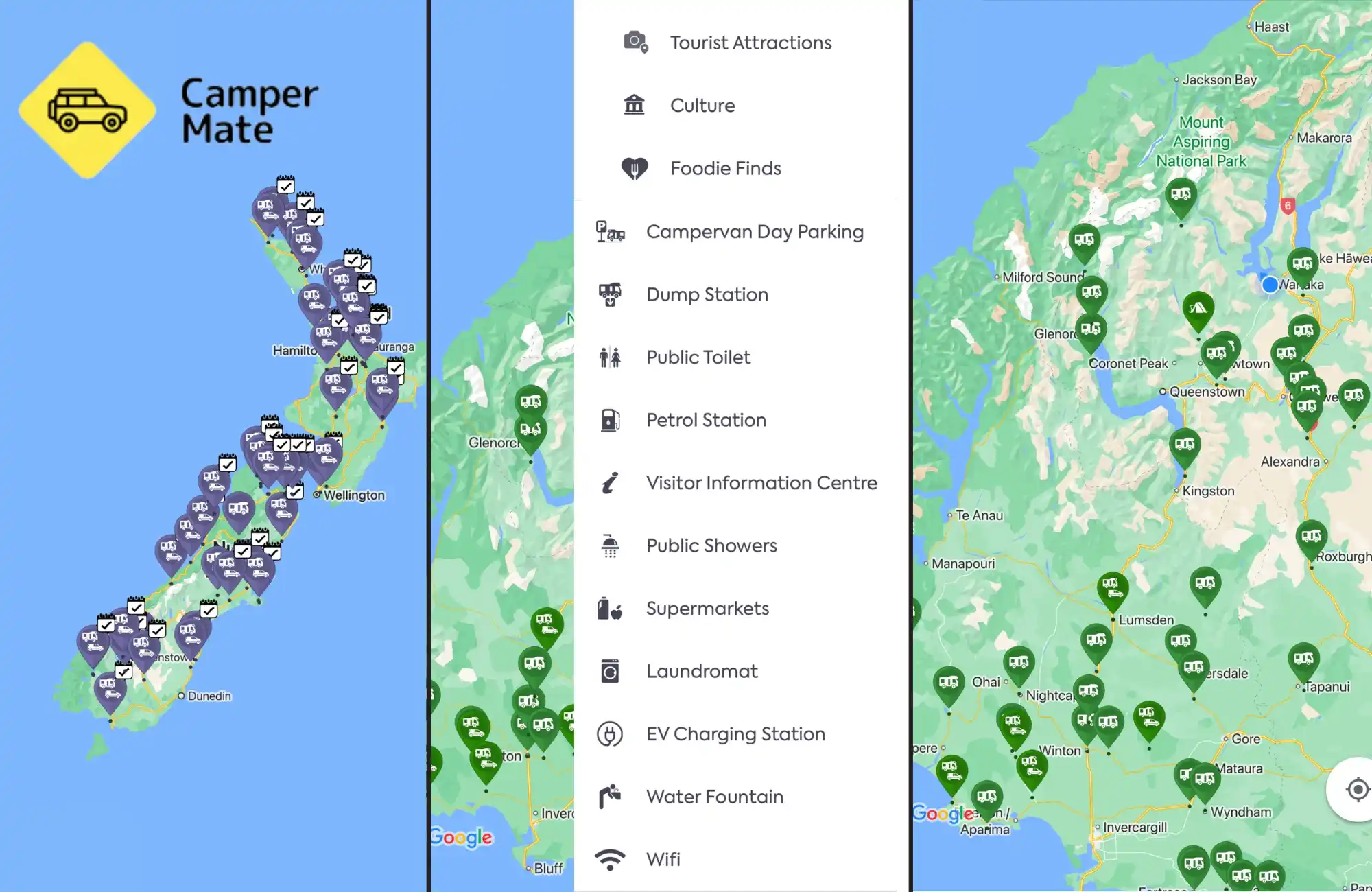
CamperMate It's the most popular app among New Zealand campers. It's very easy to use and has multiple filters to help you find everything you might need. For example, you can choose to view only free campsites, buses, etc.car Public showers (both hot and cold), water fountains to refill your tanks, and even gas stations with cooking gas refills are available. For mountain routes across the country, the best app for tracking all the trails is... Maps.me.
If you want to know more tips about the app and how to sleep, don't miss our guide on the campsites in New Zealand.
That's all the information about How to buy a van or campervan in New Zealand If you have any questions, you can leave them in the comments. To continue organizing your trip to the antipodes, you can read all our guides for traveling around New Zealand or get inspired by watching the stories on Instagram of our three months travelling around the country in a van and enjoying its nature. Thank you for reading!