Go to content

How to save up for a gap year in 5 steps
More and more people are considering taking a gap year, and most of them have the same big question: How can I save the money needed to make it happen?
It has happened to us too; we came to believe that we needed a lot of money or that it was something complicated to achieve, but with planning and perseverance we saw that it was more achievable than it seemed and we made it a reality.
In this article we are going to tell you How to save up for a gap year step by stepBased on our real-world experience and everything we've learned over the years of traveling, this course will focus on a gap year spent traveling, as that's what we know firsthand, but it's not the only option. Many people use it to pursue further education, volunteer, try new hobbies, or simply take a break from their routine.
- What is a gap year and why is it a good idea to take one?
- How much money do you really need for a gap year traveling?
- How to save up for a gap year step by step
- How long do you need to save for a gap year?
- Mistakes to make when saving for a gap year
- Frequently asked questions about saving for a gap year
- Is it worth taking a gap year?
What is a gap year and Why is it a good idea to do it??
A gap year simply consists of pause your routine for a while (it doesn't have to be exactly a year) to dedicatecarIt's about doing something new that you truly want: traveling, training, changing career paths, developing a project, or enjoying time with your family. While in countries like Germany or Australia it's widely accepted and many people do it, in others it's still surprising and can even be seen as something negative.
It's often thought that it's something students and rich people do, but More and more people are doing it at any age. and with very tight budgets.
For most people, taking a gap year involves a financial commitment, but we like to think of it as an investment in ourselves. You have time to think, prioritize, fulfill dreams, or discover what you really want to do with your life. It also forces you to learn to manage your time and money better.
The benefits vary from person to person, but some very common ones that everyone tends to agree on are:
- You disconnect from work stress.
- You see your future with more perspective.
- You turn off autopilot and you win mental clarity.
- You explore new forms of life.
In our case, it was one of the best decisions we've ever made. Not only because of all the places we visited, but also because it allowed us to experience other lifestyles, learn to enjoy our time, and discover that there are many ways to earn money and live.

How much money do you need really for a gap year traveling
The money you'll need for a gap year depends entirely on what you want to do with your time. One of the most common things, and what we did, is to dedicatecar Our gap year was spent traveling the world, so that's what we're going to talk about based on our experience.
Travel styles
Before calculating how much money you need for a gap year traveling You need to define your travel styleBackpacking is not the same as traveling in a camper van, staying in nice hotels, etc. Each travel style requires a completely different budget; we're sharing the three styles we've tried.
Backpacking trip
This is our travel style, and the one we've mastered perfectlyIt's perfect for spending only what's necessary but enjoying many unique experiences without sacrificing the essentials. When traveling for extended periods, luxuries and comforts take a backseat to sticking to a budget, but without missing out on enjoyment. The most common scenario is:
- Sleeping in hostels or guesthouses
- Eat at markets, simple restaurants, or cook
- Use public transport and walking a lot
- Doing free activities or those you really want

Standard trip
A very common type of trip for those who want a A balance between not spending too much but enjoying certain comfortsIt's a travel style we've also tried after two years of backpacking. It's less demanding, but requires a bigger budget. Its main features are:
- Simple hotels well located
- mix between local and international restaurants
- Public transportation but with use of taxi and domestic flights duly
- More paid activities and excursions
Campervan trip
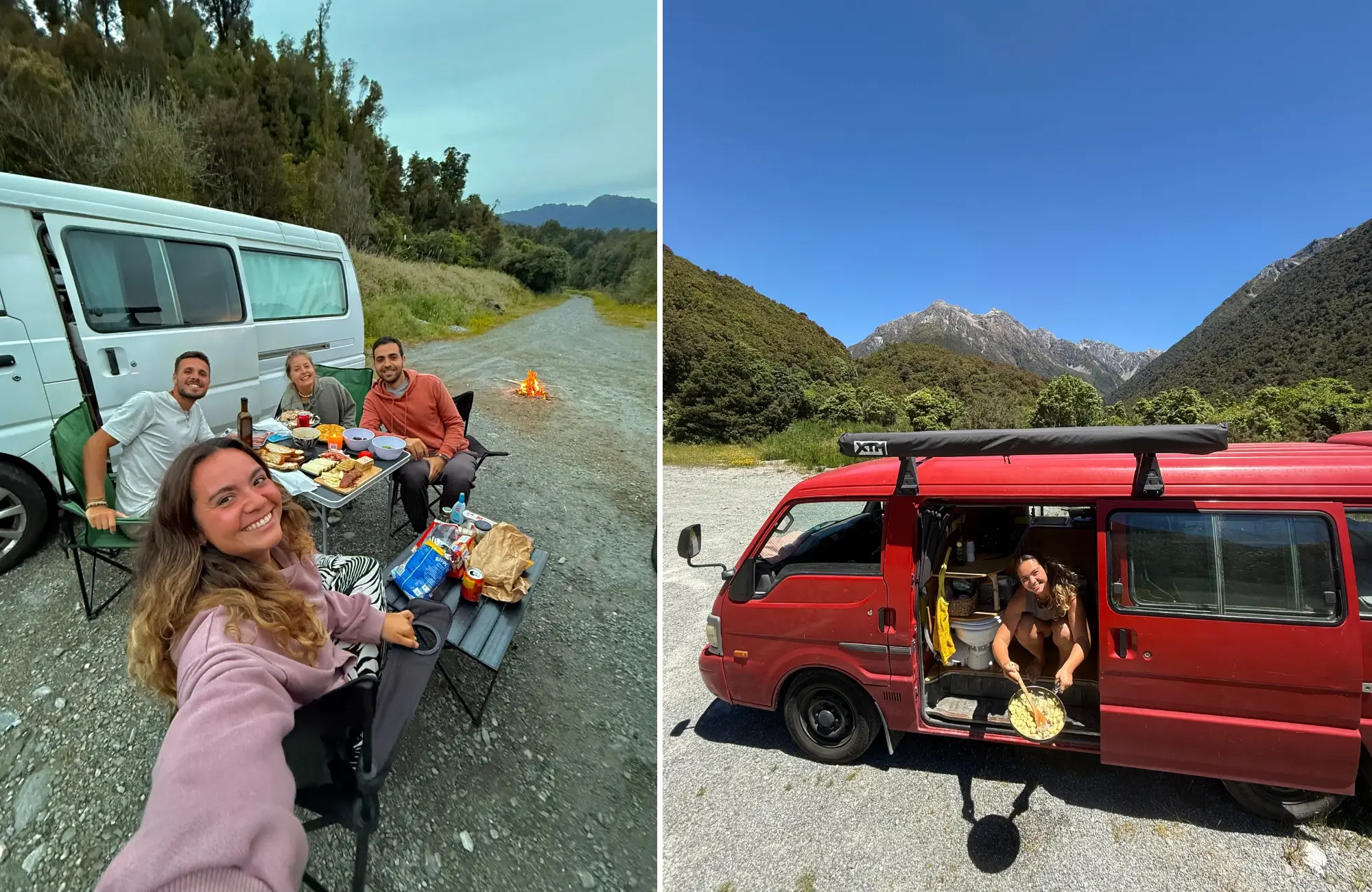
Traveling in a camper van is becoming increasingly fashionable And you can do it in many parts of the world. There are many different campervan vehicles, and both the experience and the budget depend a lot on you. We've traveled this way in New Zealand and Australia, and what we find most appealing about this style of travel is:
- possibility of sleep for free
- Cook your own food
- Not depending on public transport
- A large part of your budget goes towards gasoline and vehicle maintenance
Approximate cost per region
Once you've chosen the travel style that suits you best, it's time to see how much traveling really costs and Each region of the world is differentThere is no exact figure for each region, since travel through Bolivia It doesn't cost the same as doing it in Chile, despite being neighboring countries.
It's difficult to give an estimate, that's why we always recommend buscar Real and recent budgets for the place you want to visit will allow you to have a more realistic and clear vision.
How to estimate your budget
Once you're clear on the type of trip you want to take and have seen the approximate cost depending on the region, it's time to put real numbers to your gap year.
The simplest way to do this is to calculate a average daily expenditure depending on your travel style and destination, and multiplycarI'll charge you for the days you'll be traveling.
To make the most realistic estimate possible, we recommend dividing your budget into several categories:
- Accommodations (This cost is reduced if you travel with someone)
- Lunch time
- Transport (flights, buses, gasoline…)
- Activities and excursions
- Travel insurance
From there, you can sacar a fairly reliable daily average.
Our advice is not to settle for just a "fair" amount. On a long trip, unexpected events, changes of plans, or unforeseen expenses always arise, so it's advisable to add an extra margin of at least one 15-20%.
how to save How to take a gap year step by step
Saving up for a gap year might seem complicated or even impossible at first, but It all comes down to having a clear plan and sticking to it consistently..
We also thought it would take a lot of money and years to achieve it, but once you put real numbers into it, define a date and start making decisions, the goal stops being something distant and becomes something achievable.
Below we explain, step by step, how to save up for a gap year.
Step 1: Define your budget and your departure date
To achieve your savings goals, The first step is to have a clear numberThat amount will allow you to live a sabbatical year without excessive financial worries.
The other key element is the target date. Defining a specific moment changes everything.This helps you stay motivated and have real control over the time you have left. The more specific the date, the easier it will be to take it seriously.
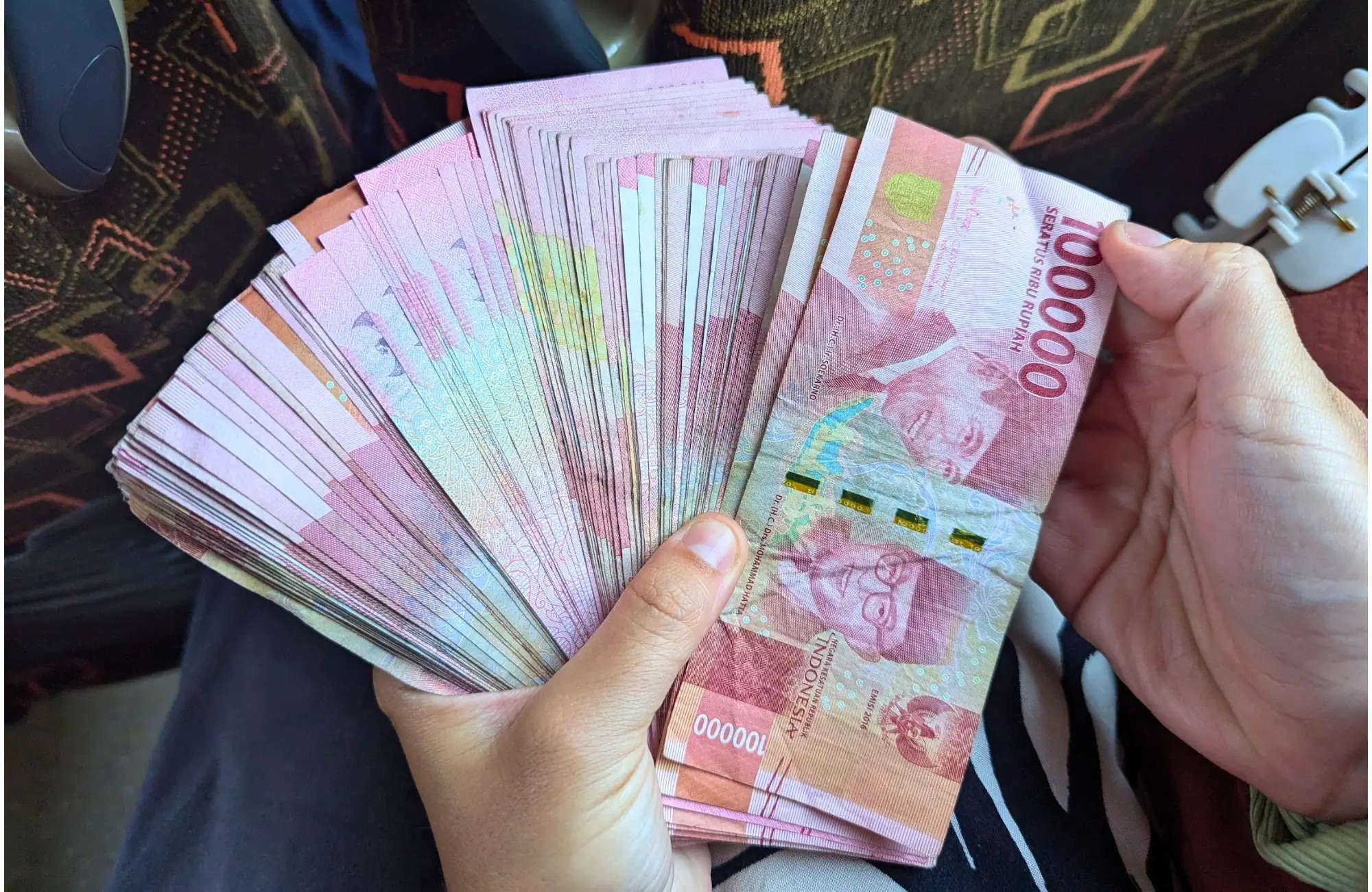
What you should try to avoid is the mentality of «I'm going to save little by little until I have enough, and then I'll see when I leave."This will only prolong the process indefinitely and, in many cases, prevent you from ever reaching your goal."
Step 2: Define your minimum monthly savings and automate it
Divide the money you need by the number of months you have until your departure date and you will get How much should you save each month?That's why having the numbers clear in step 1 is so important.
From here on everything becomes much clearer. Now you can plancarSee if your goal is realistic and decide what actions you need to take to achieve that monthly savings goal.
Automating your savings is one of the most repeated pieces of advice. For people looking to reach a target amount. Save a fixed amount from your salary each month; you can transfer it to another account right after getting paid to avoid spending it.
Step 3: Reduce your monthly expenses
Let's be realistic, most of us want to take that dream gap year as soon as possible, and, in many cases, the main obstacle is money.
Perhaps the amount you get from the calculation in the previous step seems too high. But You don't always need to earn more; often, spending less is enough..
Reducing your expenses is the quickest and easiest way to increase your savings capacityEspecially if we look at it in the long term, for example reducing €100 in your monthly expenses will allow you to save €1200 per year.
Don't obsess over small expenses; first, focus on the larger ones, because They are the ones with the most room for improvement And once you have those, move on to reviewing the smaller expenses. For example, start with rent, transportation, meals out, and then move on to typical subscriptions to streaming services and small treats.
Step 4: Increase your income
Reducing expenses is important, but there comes a point where you can't cut much more without affecting your quality of life. This is where [the solution/approach] comes in. a great solution: earn more money.
If you manage to increase your income, however slightly, you will reduce the time needed to save all the money you need, and that much-desired gap year will arrive sooner.
Hay many ways to generate a small (or large) additional incomeAll it takes is imagination and enthusiasm. Here are some examples:
- Doing extra hours or negotiate a contract improvement.
- Use your knowledge or skills to one-off jobs or private lessons(languages, IT, sports, childcare…)
- Generate online income: Create content, affiliate marketing, or work as a freelancer on platforms like Fiverr.
- Sell things you no longer use or need.
- Find free or cheap items, fix them up, and resell them.
- Obtain a second temporary income, for example a weekend job.
Step 5: Save your money wisely
Saving is not just about putting money aside, it's also about knowing where to put it so as not to lose it and, if possible, sacarIt's somewhat profitable until your gap year arrives.
As we mentioned before, it's ideal to separate your savings from your main account. This way, you avoid spending them without realizing it, you can see how you're progressing, and you stay motivated.
Exactly what to do with this money depends on your time horizon and risk profile, but since it will most likely be in the short or medium term, the important thing is not to take high risks.
We're not financial advisors; we simply share what has worked best for us and others we know. Some examples are:
- Savings accounts with the highest possible interest rates; one of the best is the one from TradeRepublic.
- Short-term deposits with a higher interest rate than a savings account.
- Money market funds or short-term bonds on platforms such as Mintos.
How much time do you need to save for a gap year
The amount of time you need to save for a gap year depends mainly on two factors: How much money do you need and how much are you able to save each month?You just have to divide one by the other.
There's no single answer, but once you have these two numbers, you can easily calculate it and...car Choose a fairly realistic date for when you could start your trip. Don't forget to add a 15% or 20% buffer to your budget for unexpected expenses.

Example of saving €300 per month
To give you a clearer idea, here are some common examples of amounts you can save monthly and typical destinations for gap years.
Let's say you want to backpack through countries like Thailand, Vietnam, Indonesia, etc. These are very common and affordable destinations for this type of trip. You just need to know How much does it cost to travel to Southeast Asia?Our actual projected budget was to spend €50 per day as a couple in 2025. If we adjust that to current prices, we believe it would be around €60 per day, or €30 per person. If you travel alone, you'll spend a bit more on accommodation, so it would be €35 or €40.
If you want to spend 6 months in that region, the calculation is simple: 183 days at €30 per day would be €5490. If we add a 20% safety net for unforeseen expenses, it would be approximately € 6600 per person.
If you start with €0 in savings and manage to save €300 per month, it would take you 22 months to reach that amount, that is In less than 2 years you could take that dream trip.
How to speed up the process
There are no magic tricks to speed up the process, It all comes down to reducing the budget or increasing monthly savings.Personally, we believe the most important thing is to find a balance between both factors. For our gap year, we opted to travel to the most affordable destinations possible, increase our monthly savings, and sell our vehicles to reach our target amount faster.
Actual numbers from our first gap year
Our initial plan was to dedicatecar a full gap year of travelingHowever, since it coincided with the end of the pandemic, many countries still had their borders closed, so we had to look elsewhere.car We were looking for a region of the world that was more open to tourism and, at the same time, affordable. That's why we decided to travel through Latin America.
We dedicate a lot of time to Research other travelers' budgets and analyze average prices of accommodations, ground transportation, and cheap restaurants. Thanks to that, we were able to estimate our daily expenses and calculated that €50 for the two of us should be enough in most countries, and that in those that were more expensive... carWe would try to spend fewer days with you to avoid running out of our savings prematurely.
€50 for 365 days amounts to slightly more than €18.000; if we add a safety net for unforeseen events, it gives us an approximate amount of €22.000 that we needed to save between the two of us to be able to start our trip.
Fortunately, we didn't start with €0 in savings, and since it was a pandemic time when it was almost impossible to leave the house, our expenses were really low, so We could easily save €1000 per month between the two of us.We also sold our car and motorcycle, which allowed us to increase our emergency fund beyond what we had anticipated. Thanks to these factors, we managed to save our target amount in less than a year.

Mistakes when saving for a gap year
Saving for a gap year isn't just about putting money aside. There are some common mistakes that can make it take longer than necessary, cause you to spend it on other things, or even prevent you from reaching your goal.
These are the most important ones you should avoid:
Spending your savings on other things
When you start accumulating money in a savings account, it's very satisfying to see the number grow month after month. The problem is that, sometimes, the amount saved becomes considerable, and it's very tempting to use that money for other things.
You must be Firm in your goals and disciplined so as not tocar that money. Even if you think of other things to do with that money, keep saving until you reach the goal you have set.
Underestimating the budget
One of the most common mistakes is calculate an overly optimistic budgetIt's easy to think you'll spend little, but on a long trip, more expenses always arise than you anticipated. Don't completely trust the extremely low prices you see on social media; they might be real, but only in very specific places and under very specific conditions.
During your trip you'll change your plans, discover fun activities you didn't know about, buy a treat or souvenir, and visit another country. caror it may be higher than expected, or the prices may simply be higher than you anticipated. All of this can cause the actual budget to be higher than the calculated one..
Not having an emergency fund
Another mistake to avoid is going on a trip without setting aside a small financial cushion. The money you've budgeted for daily expenses shouldn't be 100% of your savings. It's always advisable to set aside some money for unexpected events, both during your trip and upon your return.
This will give you much more peace of mind and prevent you from traveling in fear of unexpected events.
No planningcar carefully
If you don't define how much you need, when you want to leave, and how much you should save each month, it's very easy to lose focus and end up postponing the trip indefinitely. Having clear numbers and a target date is what really makes the difference.
Wanting to do it perfectly from the start
Many people don't start saving because they feel they don't have a perfectly defined plan, a high enough salary, or the conditions aren't perfect.
The truth is that There's never a perfect time to startThe important thing is to start planning.car and save, even if it's just a little, and adjust as you go along as you finish defining your goals.
FAQ about saving for a gap year
It totally depends on the type of trip you want to take and the region of the world. Backpacking through Asia is not the same as traveling through countries like Australia in a camper van.
Yes, absolutely. In fact, most people who take a gap year have perfectly ordinary jobs. The key is to be consistent, have a plan, increase your income, and reduce your expenses.
It's a situation best avoided, which is why it's important to calculate your budget carefully and have an extra margin that allows you to buy a flight back home before you run out of money.
It depends on the type of trip you want to take and your profile. If you're able to generate income while traveling, you have the great advantage of being able to start your trip earlier and cover your expenses, or part of them, with your earnings. The downside is that your trip will have to be slower and less flexible since you'll have to worry about finding time and places to work.
The most advisable is separate your everyday money and keep it in a different account to avoid spending it without realizing it. A good option is a high-yield savings account like TradeRepublic.
¿Worth Take a gap year?
The short answer based on our experience is yes. Taking a gap year is definitely worthwhile..
It might seem like a difficult decision at first, especially because of the money involved or breaking your routine, but the truth is, it's one of those experiences that changes your perspective. It's not just about traveling, but about... gain time, freedom, perspective and fulfill dreams or goals.
During a gap year, you discover new places, get to know yourself better, learn to adapt to different situations, and appreciate much more how you spend your time. In our case, what began as a gap year has become a lifestyle and has allowed us to find a new source of income.

We hope this guide on how to save up for a gap year We hope this has answered some of your questions and is very helpful. We've traveled halfway around the world with very little money and enjoyed it immensely from our travels, so much so that we now even make a living from it. Don't miss our other posts! guides on living while traveling And don't forget to follow us on social media for buscar inspiration on how to travel cheaply.